

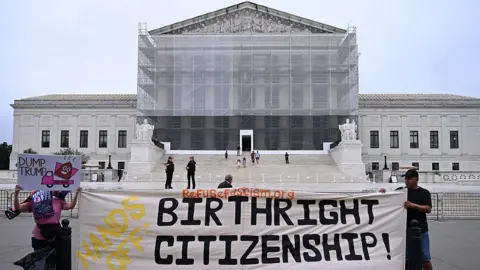
The top court has decided to review a pivotal case that questions a longstanding constitutional right: automatic citizenship for those born in the United States.
On day one in office this winter, the President issued an executive order aiming to terminate this practice, but the action was halted by federal courts after legal challenges were brought forward.
The Supreme Court's final judgment will ultimately uphold citizenship rights for the children of foreign nationals who are in the US without authorization or on temporary visas, or it will overturn the provision altogether.
Next, the judges will set a time to hear oral arguments between the government and the suing parties, which involve immigrant parents and their infants.
The 14th Amendment
For more than 150 years, the Fourteenth Amendment has established the principle that every person born in the nation is a citizen, with specific conditions for children born to foreign diplomats and personnel of occupying armies.
"Anyone born or naturalized in the United States, and subject to the jurisdiction thereof, are citizens of the United States."
The contested presidential order sought to deny citizenship to the children of people who are either in the US illegally or are in the country on non-permanent visas.
The United States belongs to a group of about 30 countries – largely in the Americas – that provide automatic citizenship to anyone born on their soil.


